Comprehensive Balance Assessment £600
A thorough evaluation for when you need real answers.
If you've been living with dizziness, vertigo, or balance problems and haven't been able to get to the bottom of it, our comprehensive balance assessment is designed for you. Whether your symptoms have been going on for weeks or years, this appointment gives us the time and the tools to take a detailed, structured look at what's going on — so you can finally start to understand what's happening and what can be done about it.
You don't need a referral. You can book directly with us.
What does the assessment involve?
The comprehensive balance assessment brings together a series of specialist tests that examine different parts of your vestibular system — the network of structures in your inner ear and brain responsible for balance and spatial awareness. Each test looks at a different aspect of how your system is functioning, allowing us to build a complete picture rather than relying on a single result.
All of the tests are non-invasive and carried out in a calm, relaxed environment. We'll explain everything as we go, so you always know what to expect.
The Tests:
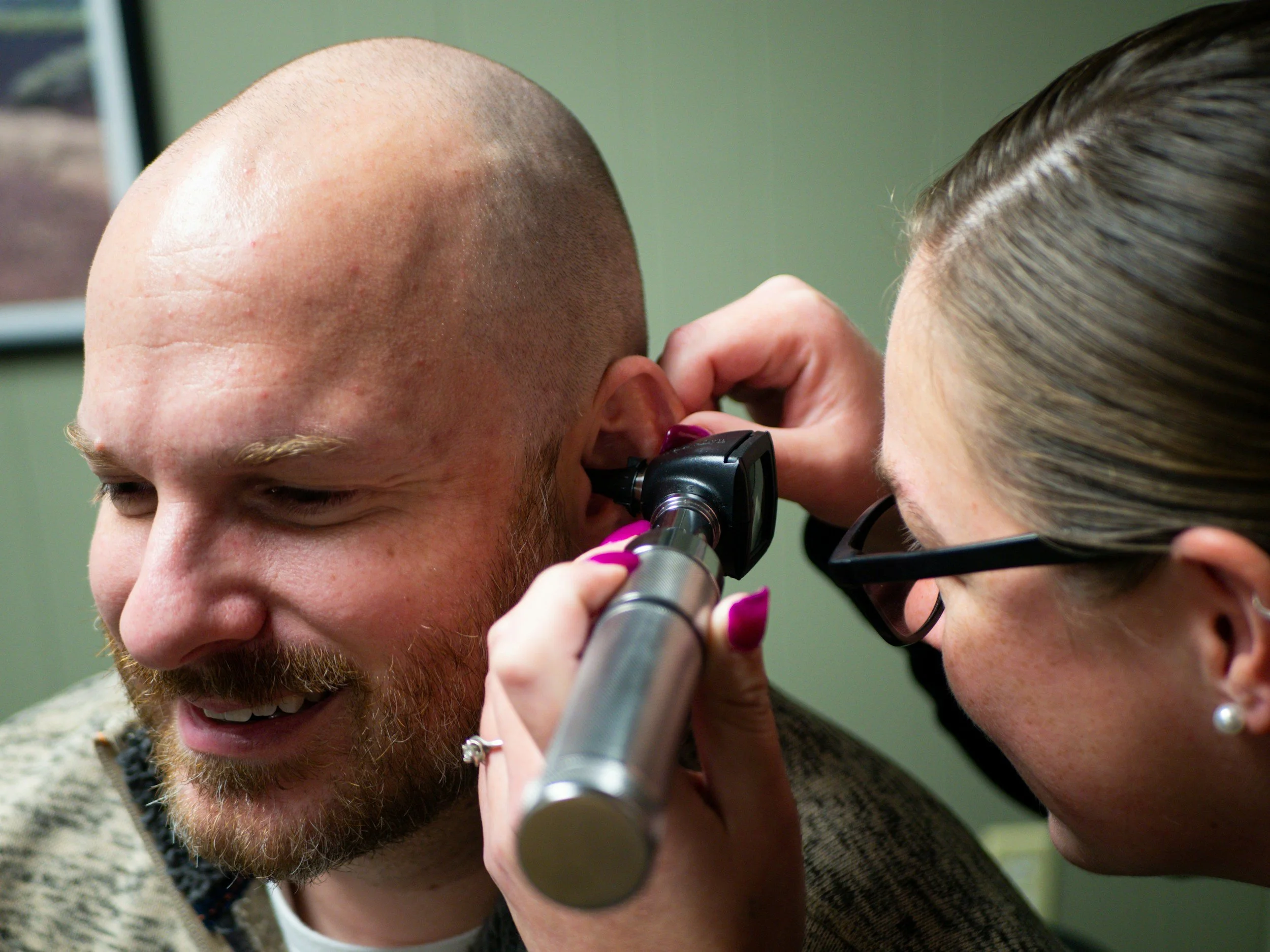
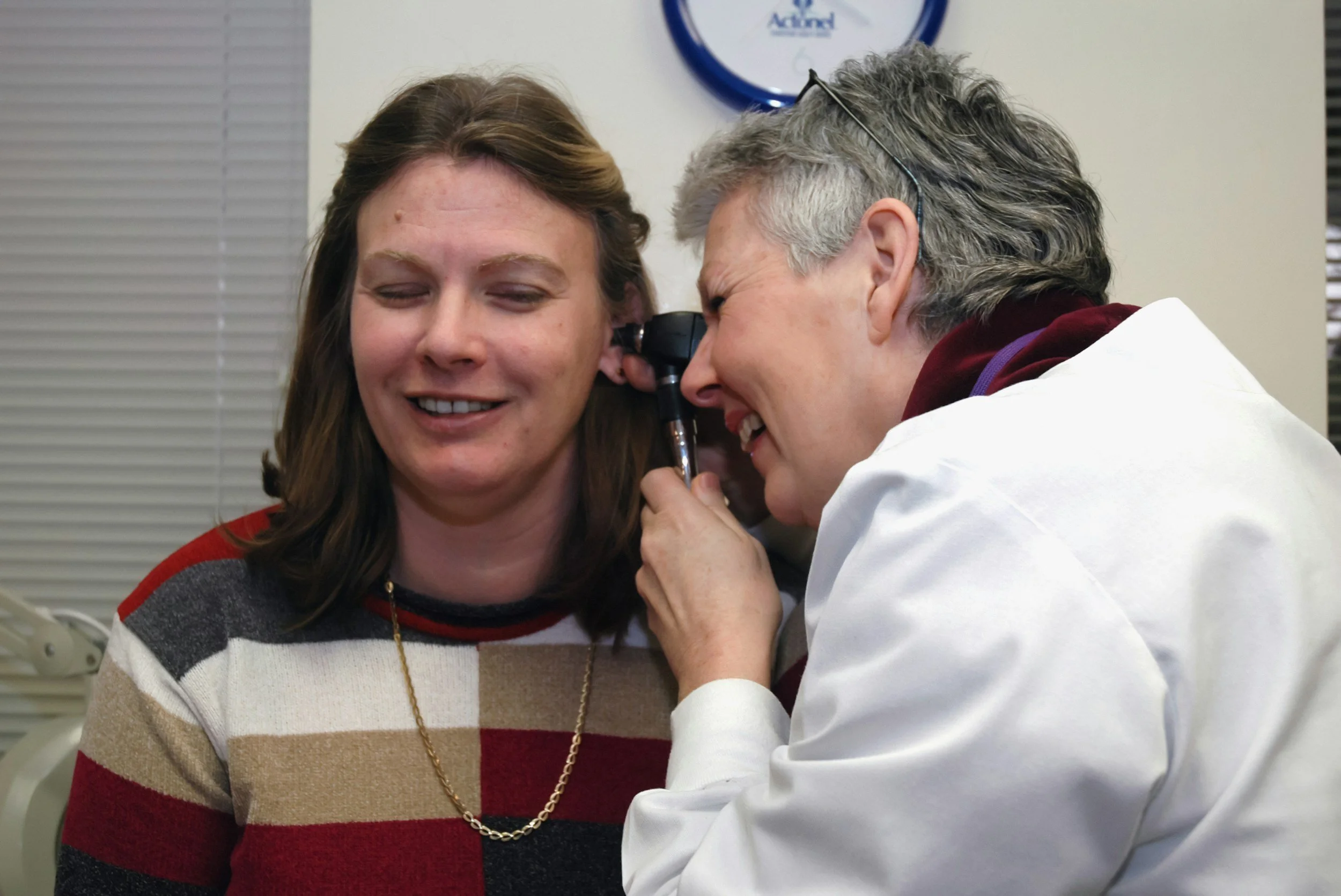
Hearing Assessment
Your hearing and your balance system share the same inner ear, so a hearing assessment can give us vital clues as to what going on internally.
Positioning & Repositioning Manoeuvres
These are simple, guided movements used to test for BPPV (Benign Paroxysmal Positional Vertigo) — one of the most common and treatable causes of dizziness.
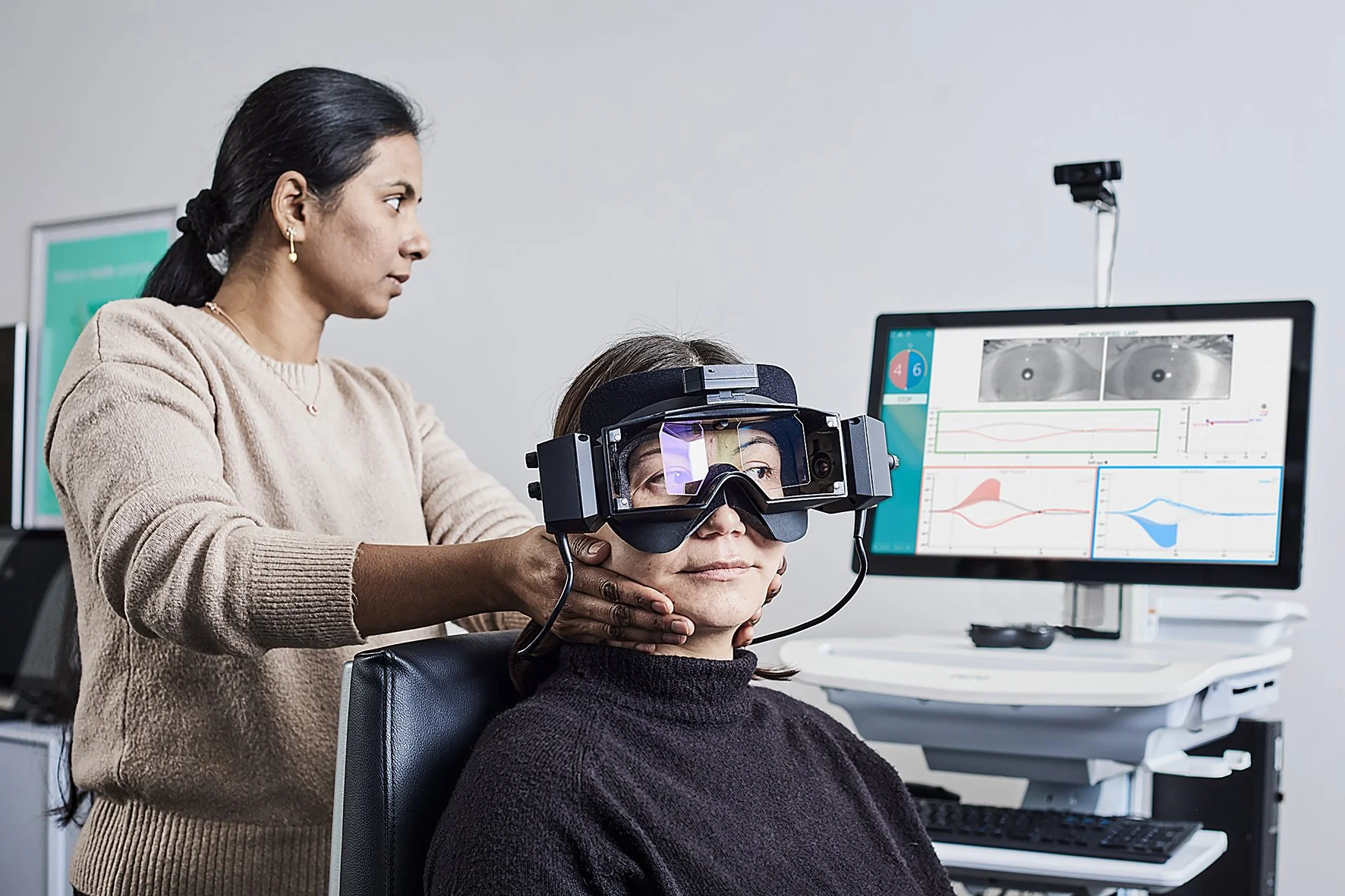
vHIT — Video Head Impulse Test
The vHIT is a highly sensitive test that measures how well you keep your vision stable when your head moves — it's what allows you to read a sign while walking, or keep your eyes focused during everyday movement.
VEMP — Vestibular Evoked Myogenic Potentials
VEMP testing assesses parts of the vestibular system that aren't evaluated by many other tests — specifically the two small but important structures in the inner ear that detect gravity and linear motion.
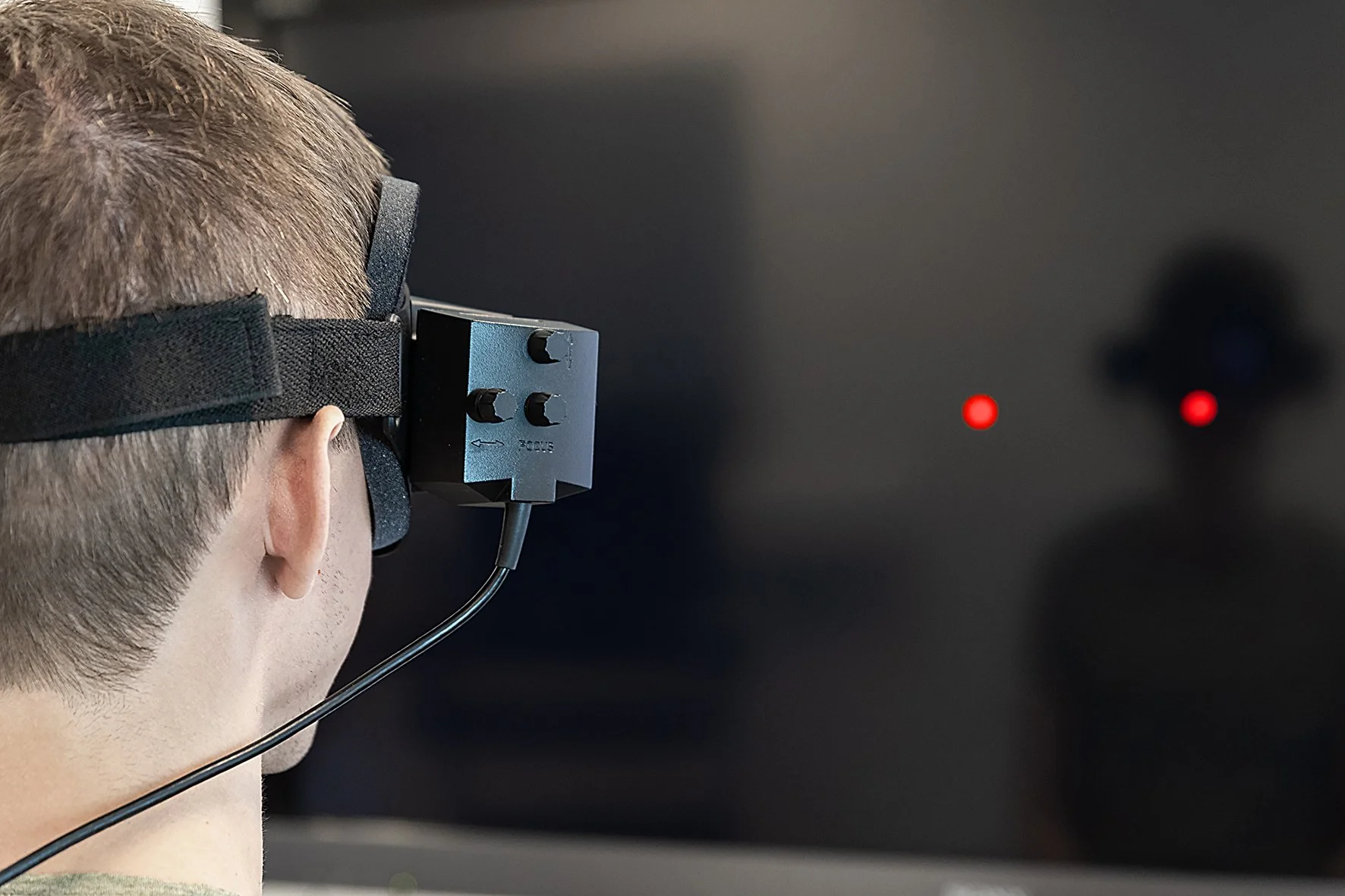
Ocular-Motor Screening
Your eyes and your vestibular system are closely connected, and the way your eyes move can tell us a great deal about the health of both. Our ocular-motor screening assesses a range of eye movements — including how smoothly your eyes can track a moving target.
What happens after the assessment?
Once all of the tests are complete you’ll be fine to go home and relax. We’ll analyse the results and write a report on what we’ve found. We'll explain what each test showed, what we think is likely causing your symptoms, and what we recommend next. This might be vestibular rehabilitation therapy, a referral to a specialist, further investigation, or reassurance that nothing serious has been found.
Whatever the outcome, you'll leave with a clear understanding of your results and a defined path forward — no vague answers, no waiting in the dark.
Ready to take the next step?
If you’d like help to get your balance problems resolved, get in touch and we’ll guide you through the process, from arranging an appointment to a friendly introductory phone call with one of our specialists.