
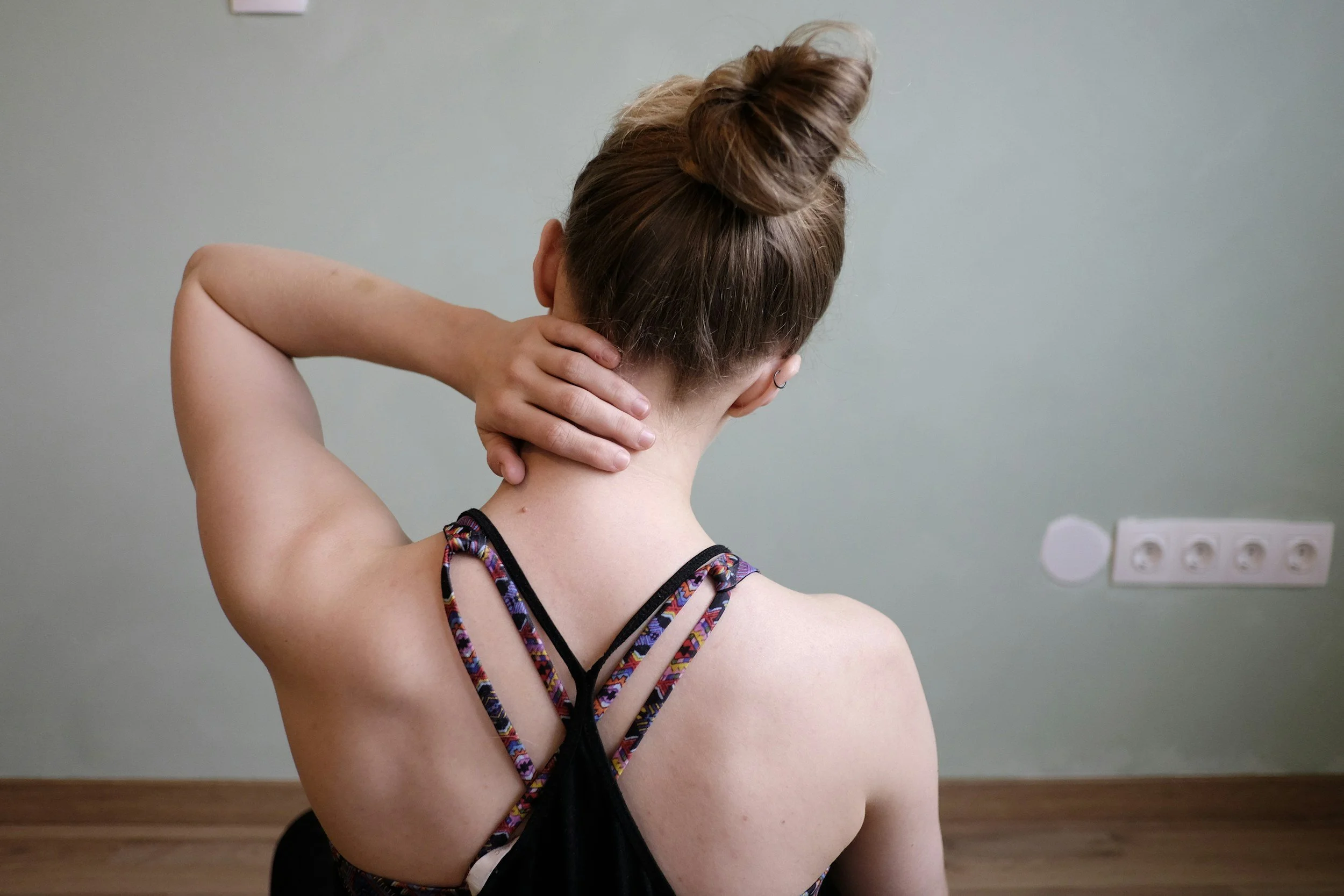
Neck Related (Cervicogenic) Dizziness
A Complete Guide to Symptoms, Causes, and Treatment
Dizziness that comes from the neck rather than the inner ear is more common than most people realise, and more commonly missed. Understanding the difference is essential to getting the right treatment.
When most people think about dizziness, they think about the inner ear. And with good reason, vestibular conditions are among the most frequent causes of dizziness and vertigo. But the inner ear is not the only structure capable of producing dizziness. The cervical spine (the neck) can be a significant and often overlooked source of balance disruption.
Cervicogenic dizziness arises when the sensory signals from the joints, muscles, and ligaments of the cervical spine are disrupted, sending confused or unreliable information to the brain about where the head is in space. The result is a dizziness that can be difficult to distinguish from vestibular conditions, and which is frequently misdiagnosed or missed entirely.
How the Neck Contributes to Balance
Balance is not the product of the inner ear alone. The brain maintains stability and spatial orientation by integrating three streams of sensory information: the vestibular system in the inner ear, vision, and proprioception (the body's sense in your muscles and joints).
The cervical spine plays a particularly important role in proprioception. The upper neck, especially the joints and muscles of the top two or three cervical vertebrae, contains a dense network of proprioceptive receptors that continuously report to the brain about the position of the head relative to the body. This information is essential for coordinating gaze, maintaining posture, and making sense of movement.
When this signalling is disrupted, through injury, inflammation, degeneration, or sustained muscle tension, the brain receives conflicting or unreliable information from the neck. This mismatch between what the neck is reporting and what the inner ear and eyes are detecting can produce dizziness, unsteadiness, and disorientation.
What Does Cervicogenic Dizziness Feel Like?
The symptoms of cervicogenic dizziness are often distinct from classic inner ear vertigo, though there is significant overlap, which is part of what makes it difficult to diagnose.
Common features include:
● A sense of dizziness, unsteadiness, or disorientation, typically not a true spinning sensation
● Symptoms that are closely linked to neck movement or sustained head positions, such as looking over your shoulder, bending forwards, or holding the head in one position for a prolonged period
● Neck pain or stiffness that accompanies or precedes the dizziness
● Headaches, often originating at the base of the skull
● A feeling of fogginess, heaviness, or difficulty concentrating
● Visual disturbance or difficulty focusing, particularly when the neck is under tension
● Symptoms that worsen when driving, working at a screen, or performing tasks that involve sustained head positions
It is worth noting that cervicogenic dizziness does not typically produce the sudden, intense rotational vertigo associated with conditions such as BPPV or vestibular neuritis. The dizziness tends to be more constant, more closely tied to neck position, and accompanied by recognisable neck symptoms.
What Causes It?
Cervicogenic dizziness most commonly arises when the cervical spine has been injured, degenerated, or subjected to sustained mechanical stress. The most frequent underlying causes include:
Whiplash and Neck Injury
Whiplash, the sudden, forceful forward-and-backward movement of the neck, most commonly sustained in road traffic accidents, is one of the most well established causes of cervicogenic dizziness. The rapid stretch and strain of the neck muscles, ligaments, and joints disrupts proprioceptive function, sometimes significantly. Dizziness following whiplash can persist long after the initial injury has settled, and is often not adequately investigated or explained.
Cervical Osteoarthritis and Degenerative Change
Age related wear and degeneration of the cervical spine, including disc degeneration, facet joint arthrosis, and osteophyte formation, can alter the mechanical environment of the proprioceptive receptors in the neck, disrupting their normal signalling. This is a common cause of cervicogenic dizziness in older adults, and can coexist with age related vestibular decline.
Chronic Muscle Tension and Poor Posture
Sustained postures, particularly prolonged screen use with the head held forward, create significant mechanical loading on the cervical muscles and joints. Chronic tension in the suboccipital muscles (those at the base of the skull) is particularly associated with cervicogenic dizziness, as these muscles contain the highest density of proprioceptive receptors in the cervical spine.
Post-Surgical Changes
Changes to the cervical spine following surgery, including fusion procedures, can alter the biomechanics of adjacent segments and affect proprioceptive signalling, occasionally producing dizziness as a consequence.
Why Is It So Often Missed?
Cervicogenic dizziness is one of the most underdiagnosed conditions in vestibular medicine, for several reasons.
First, the symptoms overlap significantly with inner ear conditions. Dizziness, unsteadiness, and disorientation are common to many conditions, and without careful clinical assessment it is easy to attribute them to the wrong source.
Second, there is no single definitive diagnostic test for cervicogenic dizziness. Imaging of the neck may show degenerative change but does not confirm that the dizziness is cervicogenic in origin. Standard vestibular tests assess the inner ear, not the neck. Diagnosis therefore relies heavily on careful clinical history, physical examination, and the exclusion of other causes.
Third, the connection between neck symptoms and dizziness is not always obvious to patients, particularly when the neck pain is mild or has been present for so long that it has become a background feature of daily life. Many patients are surprised to learn that their dizziness and their neck problems may be related.
Finally, cervicogenic dizziness is not well represented in routine GP or ENT pathways, which tend to focus on inner ear causes. Patients with persistent dizziness and neck involvement may go through multiple consultations and investigations without a clear explanation for their symptoms.
How Is It Diagnosed?
Diagnosing cervicogenic dizziness requires a thorough clinical assessment that considers both the vestibular system and the cervical spine together. Key components include:
Detailed History
Understanding the relationship between neck symptoms and dizziness, when each started, how they correlate, and what makes them better or worse, is often the most important diagnostic step. A history of neck injury, chronic neck pain, or posture related symptoms in the context of unexplained dizziness raises strong clinical suspicion.
Cervical Examination
Assessment of cervical range of motion, joint position sense, and movement quality can identify dysfunction in the proprioceptive system of the neck. Tests such as the cervical joint position error test, in which the ability to accurately return the head to a neutral position after movement is measured, can reveal deficits consistent with cervicogenic dizziness.
Smooth Pursuit Neck Torsion Test
This specialised test assesses whether rotating the neck (while keeping the head still) affects the smoothness of eye tracking movements. A deterioration in smooth pursuit when the neck is rotated suggests that cervical proprioceptive input is interfering with gaze stabilisation, a finding consistent with cervicogenic dizziness.
Vestibular Assessment
Because cervicogenic dizziness can closely resemble vestibular conditions, a full vestibular assessment is an essential part of the diagnostic process. Ruling out inner ear conditions, or identifying a coexisting vestibular problem, is necessary before a diagnosis of cervicogenic dizziness can be confidently made.
What Can It Be Confused With?
Given the overlap in symptoms, cervicogenic dizziness is most commonly confused with the following:
BPPV (Benign Paroxysmal Positional Vertigo)
Both BPPV and cervicogenic dizziness can produce dizziness with head and neck movement. In BPPV however, the dizziness is characteristically a sudden, brief spinning sensation triggered by very specific positional changes, such as lying down, rolling over in bed, or looking up. Cervicogenic dizziness tends to be less sudden, less intense, and more closely tied to sustained neck positions than to brief positional triggers. The two can coexist, which adds further complexity.
Vestibular migraine can produce chronic dizziness, neck pain, and headaches; a combination that can mimic cervicogenic dizziness. Careful history taking, particularly around the episodic nature of vestibular migraine and any associated migraine features, helps to distinguish between the two.
PPPD (Persistent Postural-Perceptual Dizziness)
PPPD can develop following a cervicogenic dizziness episode, or the two can coexist. Both produce chronic unsteadiness that is worsened by movement and visual complexity. Identifying whether a central sensitisation component has developed alongside the cervicogenic source is important, as it affects the approach to treatment.
An Important Caution
Not all neck related dizziness is cervicogenic in origin. In a small number of cases, dizziness associated with neck movement can indicate vertebrobasilar insufficiency (VBI), a reduction in blood flow through the vertebral arteries, which supply the brainstem and cerebellum.
VBI is uncommon, but it is important to be aware of because it carries a risk of stroke if unrecognised and untreated. Symptoms that may suggest VBI rather than cervicogenic dizziness include:
● Dizziness accompanied by double vision, slurred speech, or difficulty swallowing
● Sudden onset of severe headache at the back of the head
● Weakness, numbness, or clumsiness in the limbs alongside dizziness
● Loss of consciousness or near-collapse associated with neck movement
● Dizziness that is exclusively triggered by head rotation to one side
If any of these features are present, you should seek urgent medical assessment. A specialist vestibular assessment will include appropriate screening for VBI before any physical treatment to the neck is undertaken.
Treatment
When cervicogenic dizziness is correctly identified, the outlook for improvement is generally good. Treatment is typically directed at restoring normal cervical proprioceptive function and addressing the underlying mechanical cause of the dysfunction.
Cervical Physiotherapy
Targeted physiotherapy to the cervical spine, including exercises to improve joint position sense, movement control, and muscle balance, forms the foundation of treatment. The focus is not simply on reducing neck pain, but on specifically rehabilitating the proprioceptive system.
Vestibular Rehabilitation
Where the dizziness has produced secondary visual sensitivity, balance disruption, or avoidance behaviours, vestibular rehabilitation exercises help to retrain the brain's ability to integrate signals from the neck, eyes, and inner ear. Gaze stabilisation exercises and balance training are commonly incorporated.
Postural Correction and Ergonomics
Addressing the sustained postures and loading patterns that contribute to cervical dysfunction is an important part of longterm management. This often includes guidance on workstation setup, screen habits, and movement patterns.
Manual Therapy
Where appropriate and safe, manual therapy techniques applied to the cervical spine can help to restore normal joint mobility and reduce the mechanical tension that is disrupting proprioceptive function. This is always preceded by careful screening to ensure it is appropriate.
Treating Coexisting Conditions
Where cervicogenic dizziness coexists with another condition, such as PPPD, vestibular migraine, or an inner ear problem, treatment needs to address both simultaneously. A thorough assessment is essential to identify all contributing factors.
When to Seek Assessment
You should seek specialist assessment if:
● You have persistent dizziness or unsteadiness that is associated with neck pain, stiffness, or previous neck injury
● Your dizziness is triggered or worsened by head and neck movements or sustained positions
● You have been told your dizziness has no inner ear cause but have not had your cervical spine specifically investigated
● Your dizziness began or worsened following a whiplash injury or neck trauma
● You have unexplained dizziness alongside chronic headaches, particularly at the base of the skull
Final Thoughts
Cervicogenic dizziness is a real, well documented condition that is frequently overlooked in the investigation and management of unexplained dizziness. If you have persistent dizziness alongside neck symptoms, particularly following injury, or in the context of chronic neck pain, it deserves proper investigation.
The good news is that once it is correctly identified, cervicogenic dizziness responds well to targeted treatment. You do not have to manage indefinitely with dizziness that no one has been able to explain.
We're here to help find the answers.
Contact us.
If you think you may have a balance or dizziness issue we are here to help
Contact us now to arrange an appointment