
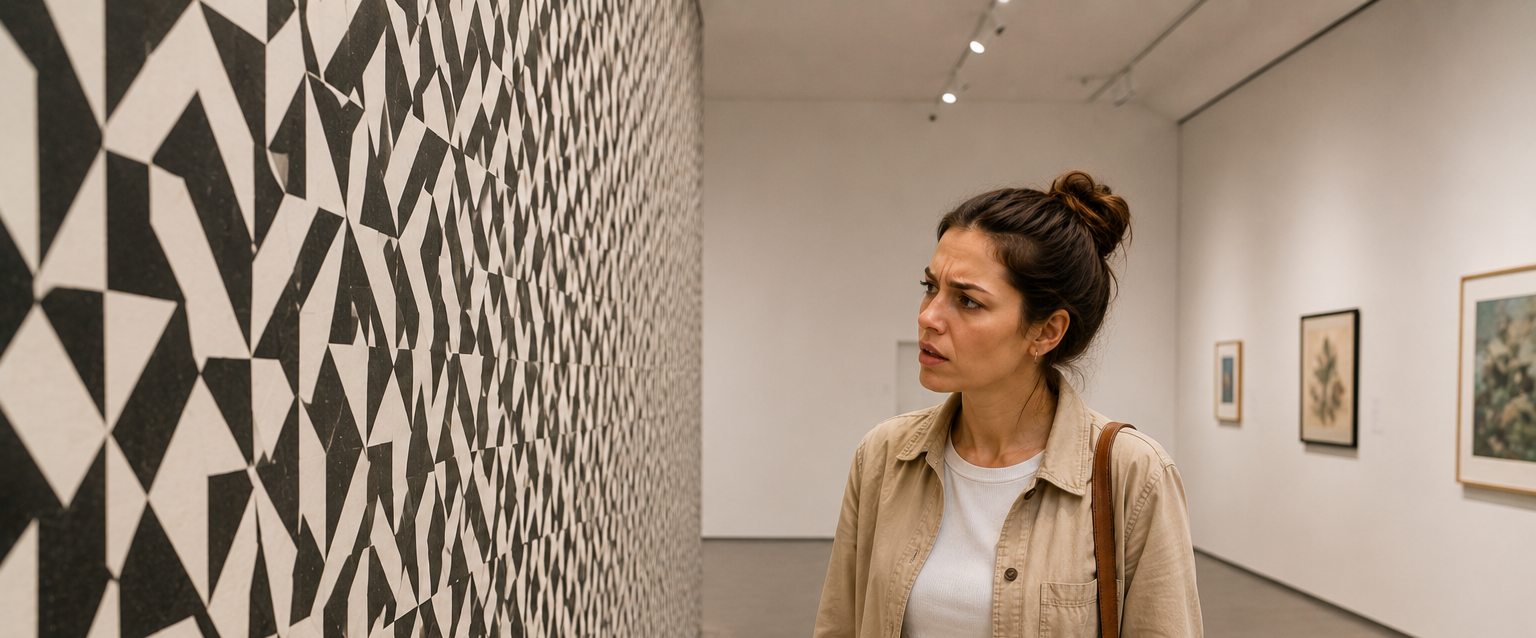
Visually Induced Dizziness
(Sometimes called “Visual Vertigo)
A Complete Guide to Symptoms, Causes, and Treatment
Visually induced dizziness occurs when the brain becomes overly reliant on visual information to maintain balance. Instead of the eyes and inner ears working together efficiently, visually busy environments overwhelm the balance system, leading to dizziness and unsteadiness.
What Is Visually Induced Dizziness?
Maintaining balance depends on three systems working together:
The vestibular system (balance organs of the inner ear)
Vision
Proprioception (information from muscles and joints)
Normally, the brain combines information from all three systems.
However, after a vestibular disorder or other balance problem, the brain may begin relying too heavily on visual information. This is known as visual dependence.
When surrounded by complex visual scenes, the brain struggles to process the large amount of incoming information, resulting in dizziness or imbalance.
What Triggers Visually Induced Dizziness?
Symptoms are commonly triggered by:
Supermarkets
Shopping centres
Busy high streets
Airports
Railway stations
Crowds
Escalators
Watching fast-moving traffic
Scrolling on mobile phones
Computer screens
Watching action films
Busy wallpaper, patterned carpets or checked/tiled floors
Large open spaces
Many people also notice symptoms while driving, particularly on busy motorways.
What Does It Feel Like?
People often describe:
Feeling off balance
Floating sensations
Rocking or swaying
Motion sensitivity
Feeling detached or "spaced out"
Difficulty concentrating
Blurred vision during movement (oscillopsia)
A feeling that the floor is moving
Anxiety in visually busy environments
A need to hold onto shopping trolleys or walls
Unlike vertigo, symptoms often involve unsteadiness rather than spinning.
What Causes Visually Induced Dizziness?
Visually induced dizziness is not a diagnosis in itself. Instead, it is a symptom that may occur with several different conditions.
Persistent Postural-Perceptual Dizziness (PPPD) - One of the most common causes. People often develop persistent visual motion sensitivity after an initial vestibular event.
Vestibular Migraine - Visual motion is a common migraine trigger. Busy environments, bright lighting and scrolling screens may provoke dizziness.
Vestibular Neuritis (in recovery) - Following vestibular neuritis, the brain undergoes compensation. During recovery, visual environments often trigger symptoms until adaptation occurs.
Bilateral Vestibular Loss - People with reduced balance function in both ears rely heavily on vision, making busy environments particularly challenging.
Concussion and Head Injury - Visual motion sensitivity is common following concussion and may persist for several months.
Is It an Eye Problem?
Usually not, most people with visually induced dizziness have healthy eyes. Instead, the difficulty lies in how the brain processes visual information alongside signals from the inner ear and the rest of the balance system. If visual problems are suspected, an eye examination may still be recommended.
How Is Visually Induced Dizziness Diagnosed?
Diagnosis begins with a detailed clinical history.
Assessment may include:
Hearing tests
Video Head Impulse Test (vHIT)
Videonystagmography (VNG)
Caloric testing
Vestibular Evoked Myogenic Potentials (VEMP)
Computerised Posturography
Positional testing for BPPV
Assessment of visual motion sensitivity
These tests help identify any underlying vestibular disorder and determine the most appropriate treatment.
Treatment
Treatment focuses on reducing visual dependence and improving the brain's ability to process sensory information.
Vestibular Rehabilitation Therapy - Individualised exercises help improve balance and reduce symptoms.
Visual Motion Desensitisation - Gradual exposure to visually challenging environments allows the brain to adapt over time.
Treating the Underlying Condition - Managing conditions such as vestibular migraine or PPPD often reduces visually induced dizziness.
Lifestyle Advice - Improving sleep, reducing stress and maintaining physical activity can support recovery.
Can It Improve?
Yes. Most people improve significantly with appropriate diagnosis and vestibular rehabilitation. Recovery may take weeks or months, depending on the underlying cause and how long symptoms have been present. The earlier treatment begins, the better the outcome is often likely to be.
When Should I Seek Medical Advice?
You should seek assessment if:
Supermarkets or shopping centres make you feel dizzy.
Busy visual environments trigger imbalance.
You avoid crowds because of dizziness.
Your symptoms persist for more than a few weeks.
Your balance problems interfere with daily life.
You should seek urgent medical attention if dizziness is accompanied by:
Sudden hearing loss
Double vision
Weakness
Difficulty speaking
Severe headache
How Can Northern Balance Clinic Help?
At Northern Balance Clinic, we specialise in diagnosing and managing visually induced dizziness using comprehensive vestibular assessment.
Our advanced testing can identify conditions including:
Persistent Postural-Perceptual Dizziness (PPPD)
Vestibular migraine
Vestibular neuritis
Benign Paroxysmal Positional Vertigo (BPPV)
Bilateral vestibular loss
Age-related vestibular decline
Functional balance disorders
By identifying the underlying cause of your symptoms, we can recommend the most appropriate treatment to help you regain confidence and return to everyday activities.
Book an Assessment
If busy visual environments, crowds, or moving scenes consistently make you feel dizzy or unsteady, our specialist vestibular clinicians can provide a comprehensive assessment to determine the cause and guide your recovery.
Ready to take the next step?
If you’d like help to get your balance problems resolved, get in touch and we’ll guide you through the process, from arranging an appointment to a friendly introductory phone call with one of our specialists.