What Is VNG?
(Videonystagmography)
What it diagnoses and how it helps investigate dizziness
Videonystagmography (VNG) is a specialised test used to assess the function of your balance system (vestibular system).
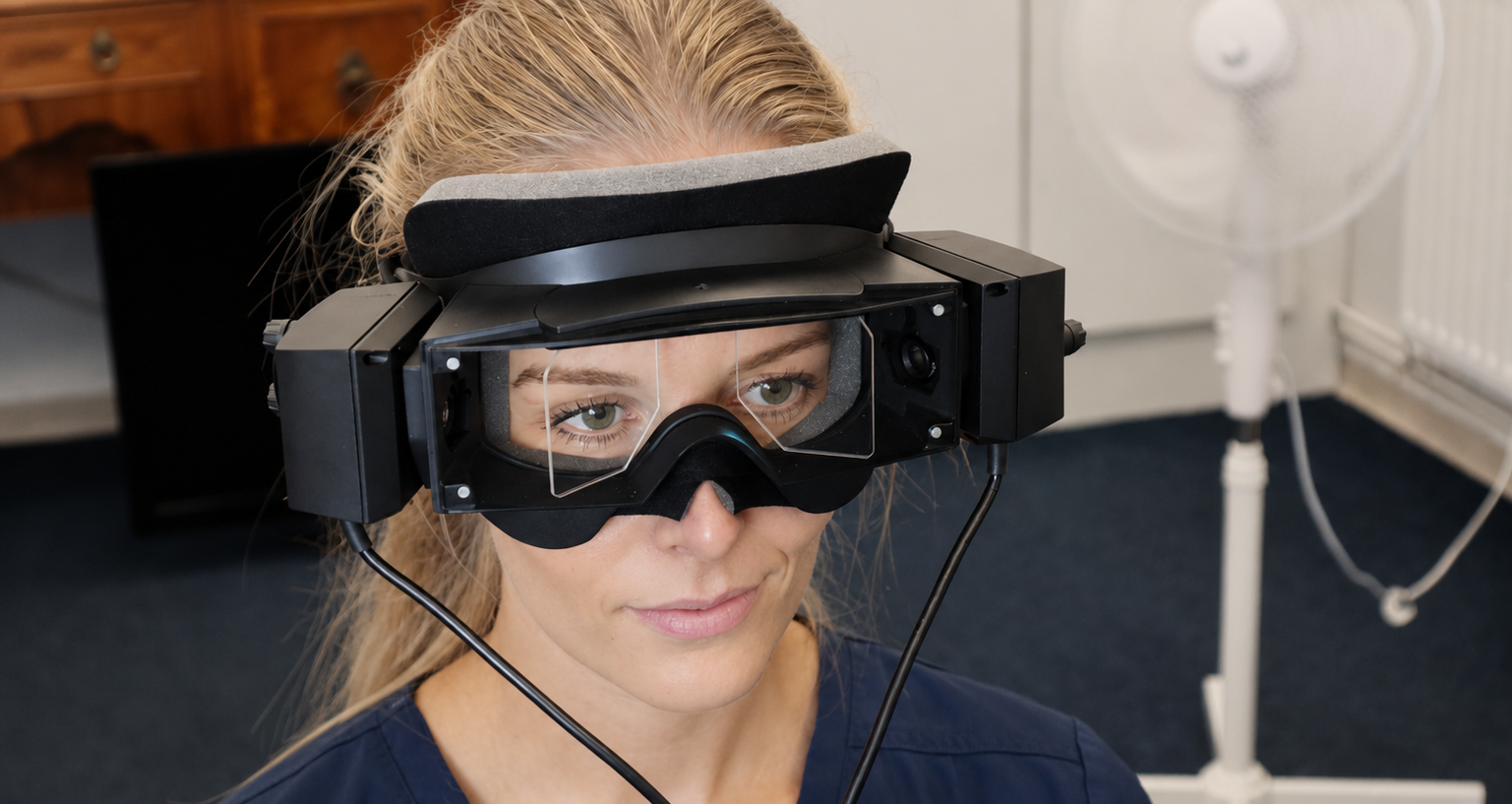
The test uses lightweight infrared video goggles to record tiny eye movements under a variety of conditions as you sit in front of a screen. These eye movements provide important information about how the inner ears and brain are working together to maintain balance.
Because the balance organs and eye muscles are closely connected through the vestibulo-ocular reflex (VOR), abnormalities in eye movements can help identify problems affecting the vestibular system.
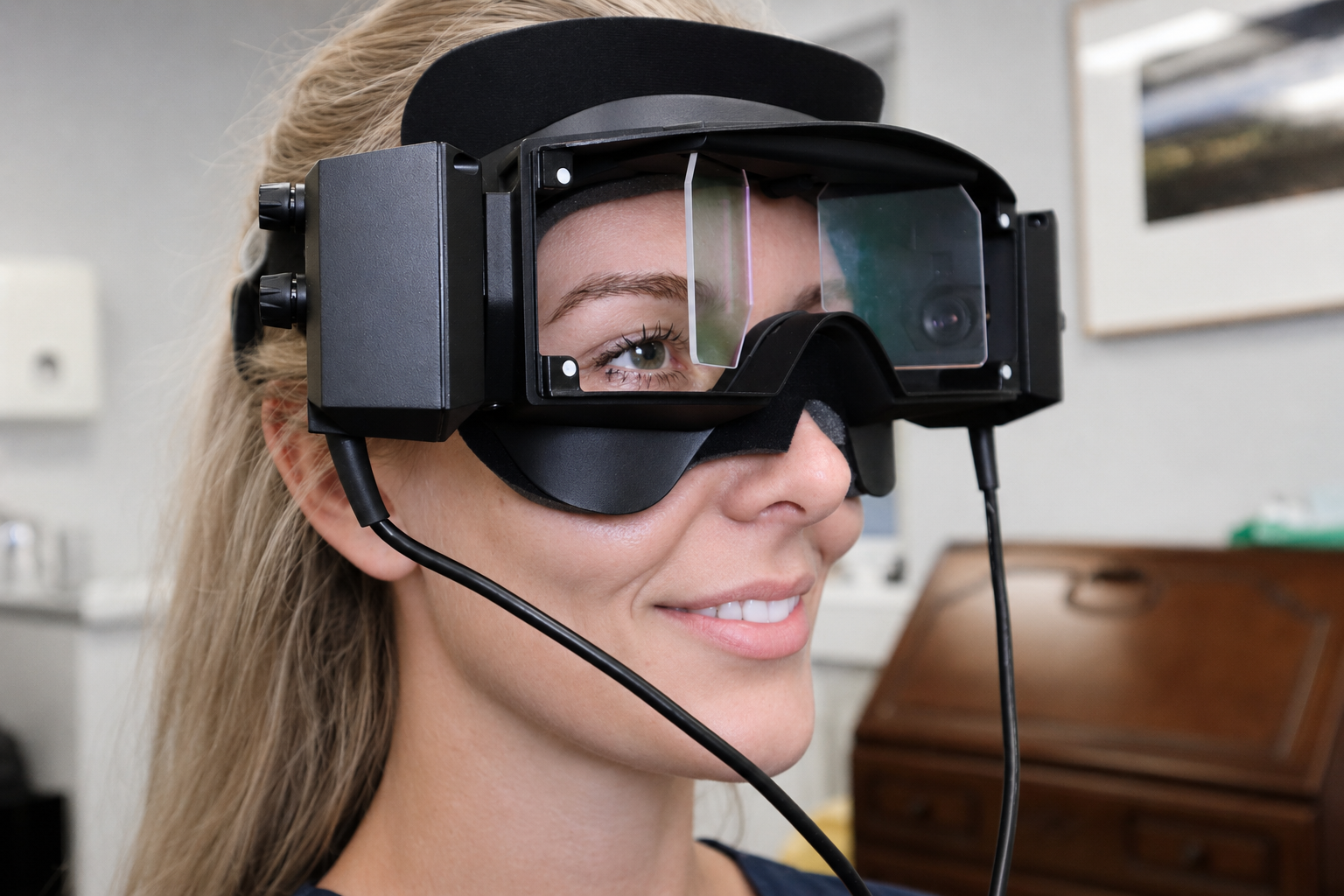
Lilley wearing VNG goggles, cushioned with foam making them comfortable to wear.
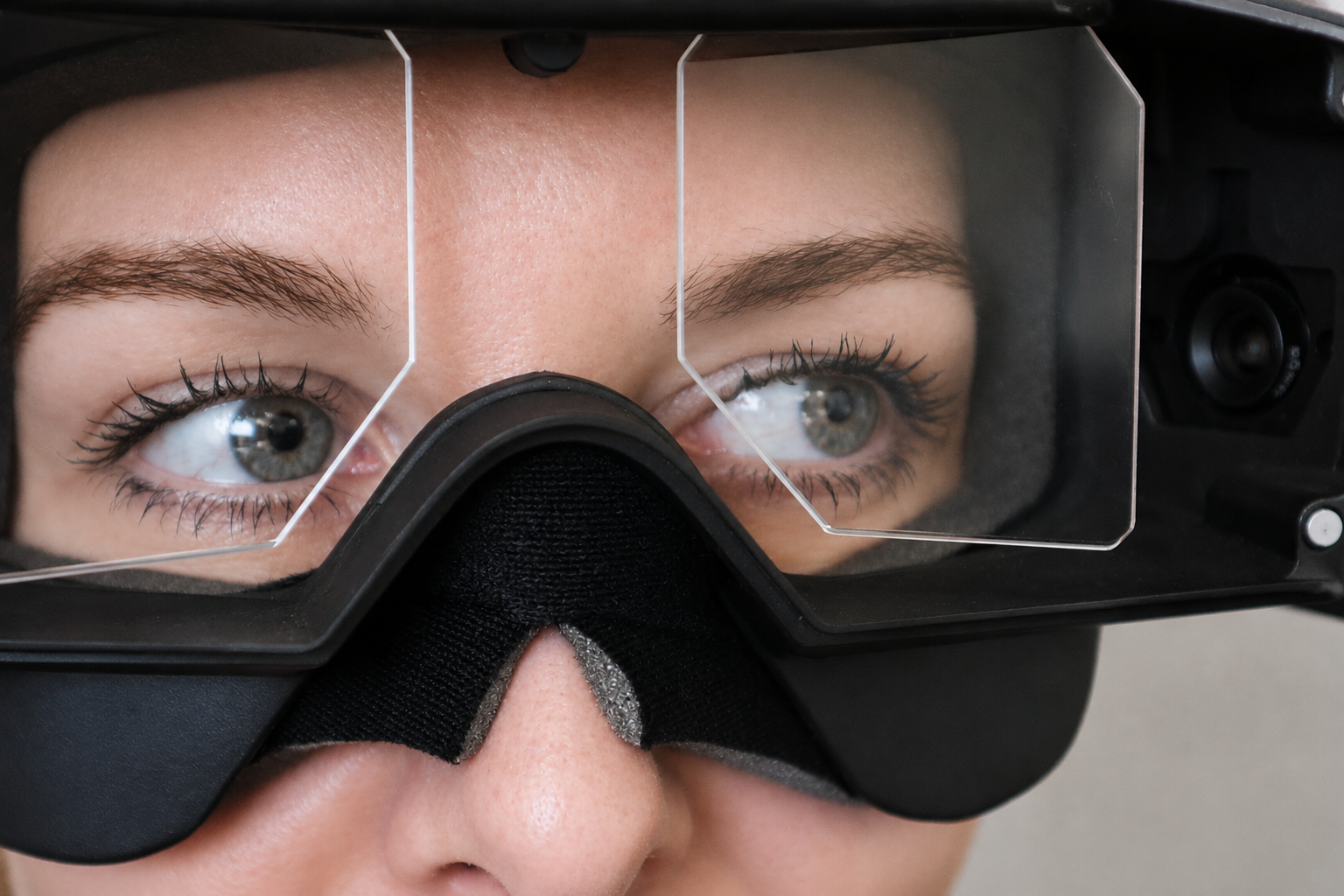
The cameras on each side of our VNG system record eye movements at 100 times per second.
Why Might I Need a VNG Test?
Your clinician may recommend VNG if you experience:
Vertigo
Persistent dizziness
Feeling off balance
Frequent falls
Motion sensitivity
Dizziness when turning your head
Unexplained nausea
Suspected inner ear disorders
The test can also help distinguish between disorders affecting the inner ear and those arising from the central nervous system.
What Conditions Can VNG Help Diagnose?
VNG provides valuable information when investigating conditions such as:
Central vestibular disorders
In many cases, VNG is combined with other vestibular investigations to provide a comprehensive assessment.
What Happens During the Test?
The assessment usually consists of several different components.
Medical History - Your clinician will first discuss your symptoms, medical history and any previous episodes of dizziness.
Eye Movement Assessment (Oculomotor Testing) - While wearing infrared goggles, you will be asked to follow moving lights on a screen.
These tests assess:
Smooth pursuit
Saccades (rapid eye movements)
Optokinetic responses
Gaze stability
This helps evaluate how your brain controls eye movements.
Positional Testing - Your clinician will move your head and body into different positions while monitoring your eye movements. This helps identify positional vertigo, including BPPV.
Caloric Testing - Warm and cool air is introduced into each ear separately. This gently stimulates one balance organ at a time, allowing each ear to be assessed independently. You may experience temporary dizziness during this part of the test, which usually settles within a few minutes. Caloric testing remains one of the most sensitive methods for detecting weakness affecting one vestibular system.
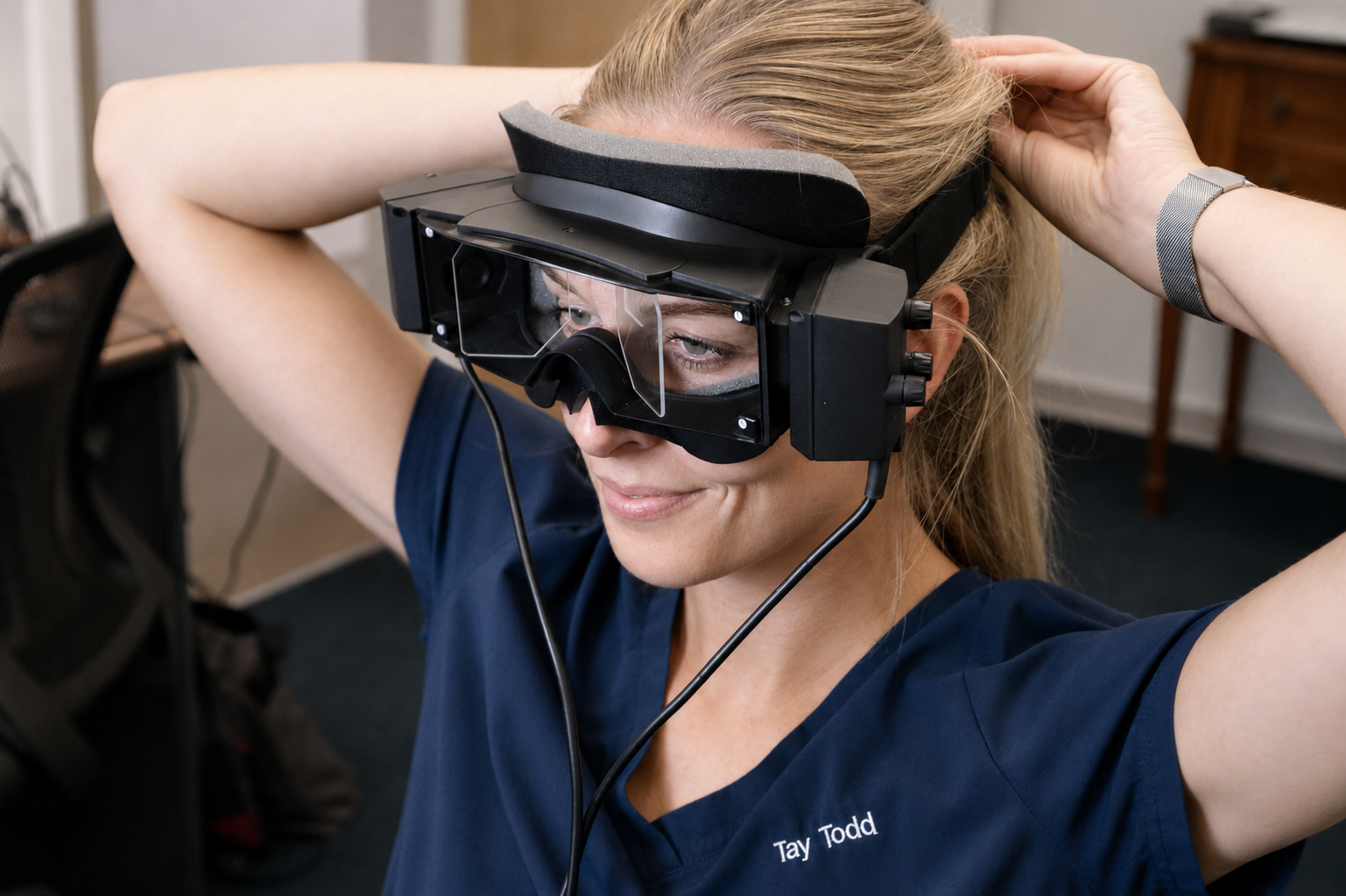
The goggles are fitted via an adjustable band round the back of the head.
Does a VNG Test Hurt?
No. VNG is non-invasive and does not cause pain. Some parts of the assessment (particularly positional testing and caloric testing) may briefly reproduce your dizziness or vertigo. While this can feel unpleasant, it is temporary and provides valuable diagnostic information. Most people recover within a few minutes after testing has finished.
How Should I Prepare?
Your clinician will provide specific instructions before your appointment.
You may be asked to:
Avoid vestibular suppressants (if medically appropriate)
Avoid alcohol for 24–48 hours
Limit caffeine on the day of testing
Avoid wearing eye make-up, particularly mascara or eyeliner, as this can interfere with infrared eye tracking
Eat a light meal beforehand to reduce the chance of nausea
If you are unsure whether to stop any medication, always seek advice before doing so.
What Do the Results Mean?
VNG helps determine whether your dizziness is likely to be caused by:
Abnormal central eye movement control
The results are interpreted alongside your symptoms, examination findings and any additional vestibular tests. A normal VNG does not necessarily mean your dizziness is "all in your head." Some conditions, such as vestibular migraine and PPPD, often require additional clinical assessment for diagnosis.
Is VNG Enough on Its Own?
No, modern vestibular assessment often combines VNG with other specialised tests, including:
Video Head Impulse Test (vHIT)
Vestibular Evoked Myogenic Potentials (VEMP)
Computerised Dynamic Posturography
Audiological assessment
Together, these tests provide a far more complete picture of how your balance system is functioning.
How Can Northern Balance Clinic Help?
At Northern Balance Clinic, VNG forms part of our comprehensive vestibular assessment.
Using state-of-the-art equipment and experienced vestibular clinicians, we combine VNG with other advanced investigations to accurately diagnose the cause of dizziness and balance disorders.
Our assessments help identify conditions including:
Benign Paroxysmal Positional Vertigo (BPPV)
Vestibular neuritis
Ménière's disease
Vestibular migraine
Persistent Postural-Perceptual Dizziness (PPPD)
Bilateral vestibular loss
Central vestibular disorders
By identifying the underlying cause of your symptoms, we can recommend the most appropriate treatment and rehabilitation.
Book a Comprehensive Vestibular Assessment
If you are experiencing dizziness, vertigo or persistent balance problems, our specialist vestibular clinicians can perform a detailed assessment, including Videonystagmography (VNG), to help determine the underlying cause of your symptoms.
Ready to take the next step?
If you’d like help to get your balance problems resolved, get in touch and we’ll guide you through the process, from arranging an appointment to a friendly introductory phone call with one of our specialists.