What Is a Video Head Impulse Test (vHIT)?
What it diagnoses and how it helps investigate dizziness
Many people undergoing assessment for dizziness or vertigo are recommended a Video Head Impulse Test (vHIT). Although the name sounds technical, the test is quick, non-invasive and provides valuable information about how well your balance organs are functioning.
What Is a Video Head Impulse Test (vHIT)?
The Video Head Impulse Test (vHIT) is an advanced assessment used to measure how well the balance organs of the inner ear are working.
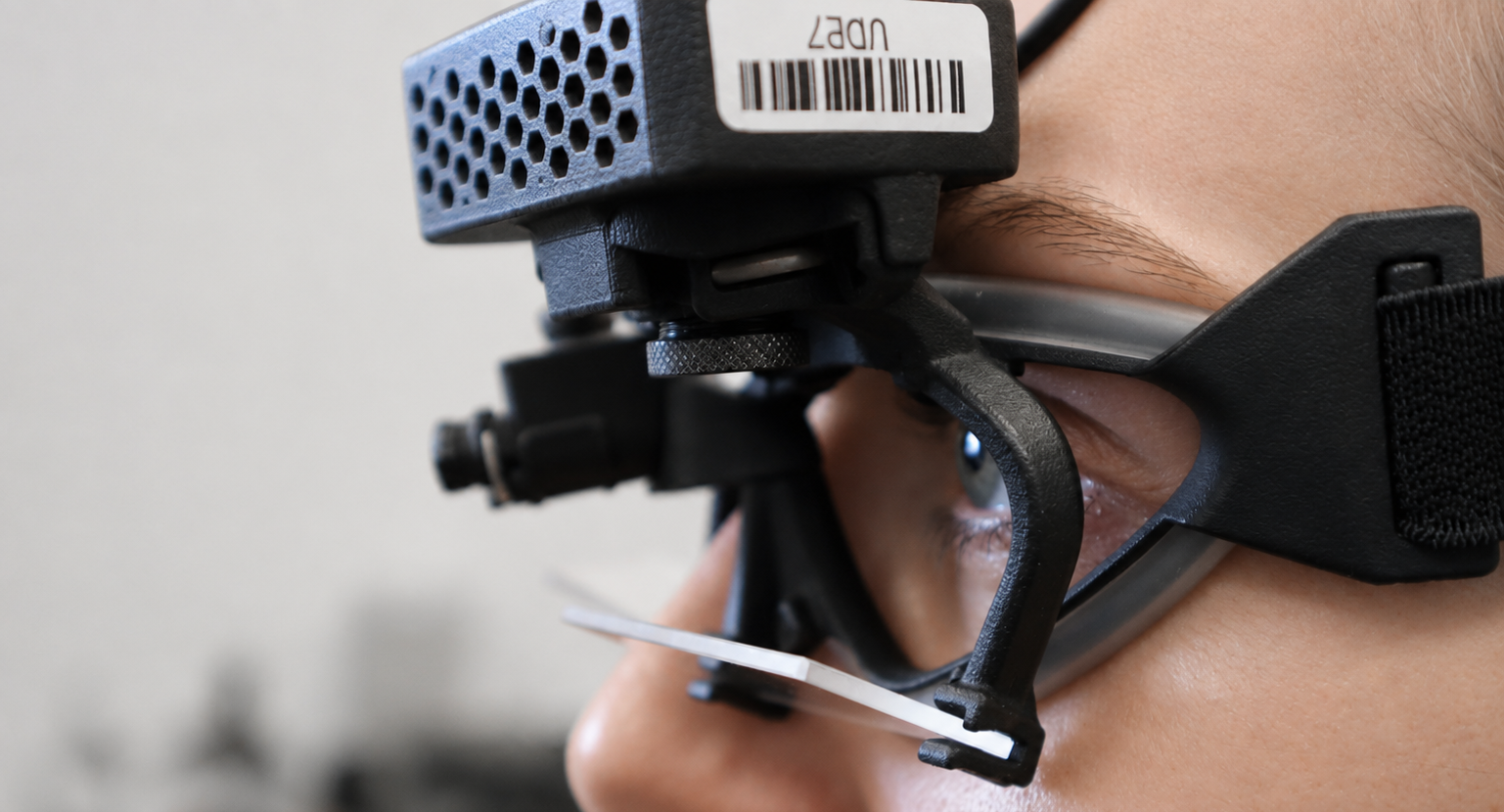
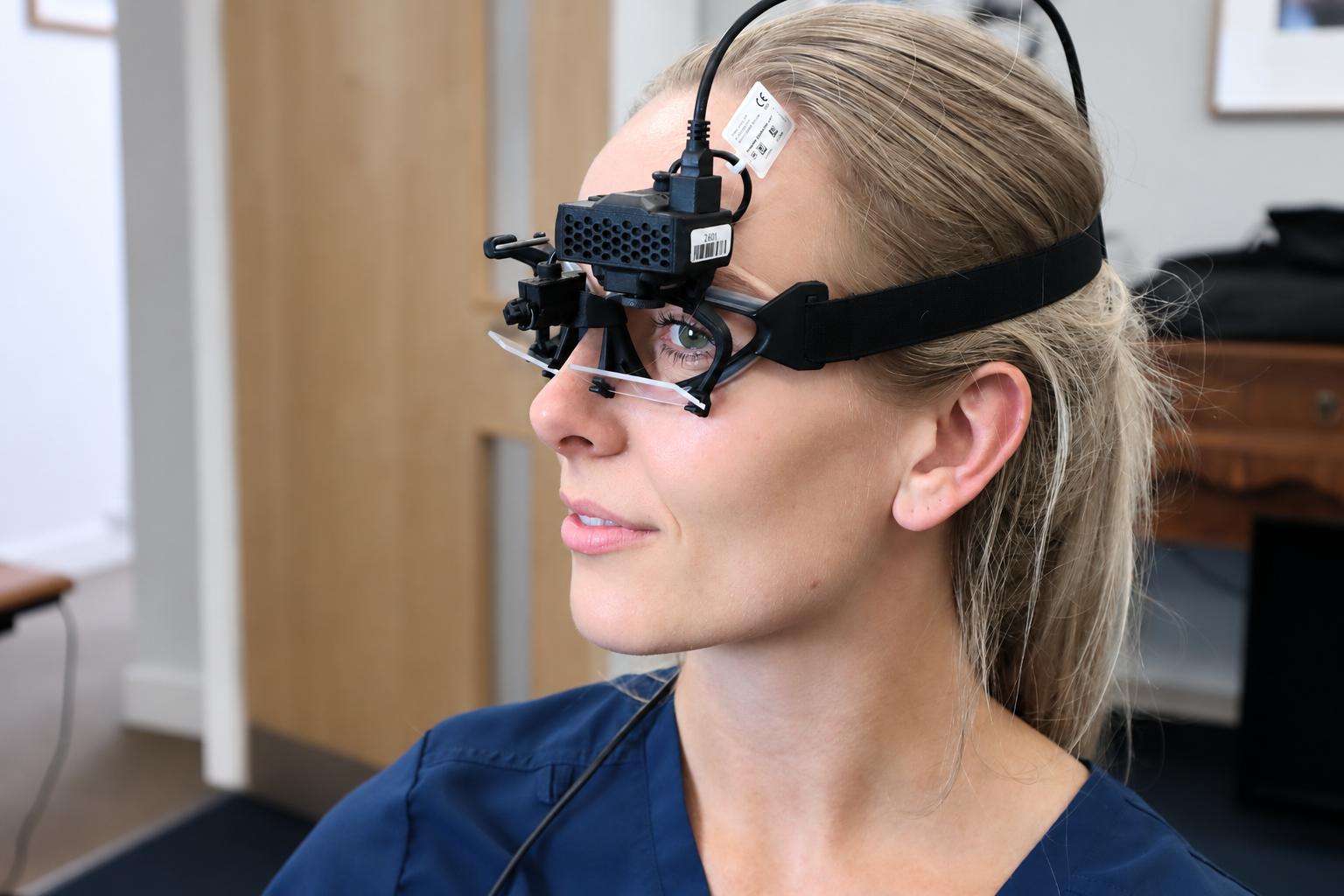
During the test, lightweight goggles equipped with a high-speed camera record your eye movements while your clinician makes a series of small, quick head movements.
The test measures the Vestibulo-Ocular Reflex (VOR), a reflex that keeps your vision stable when you move your head.
A healthy vestibular system allows your eyes to remain fixed on a target even during rapid head movements. If one or more balance organs are not functioning normally, the eyes may briefly move away from the target before making a corrective movement, known as a catch-up saccade.
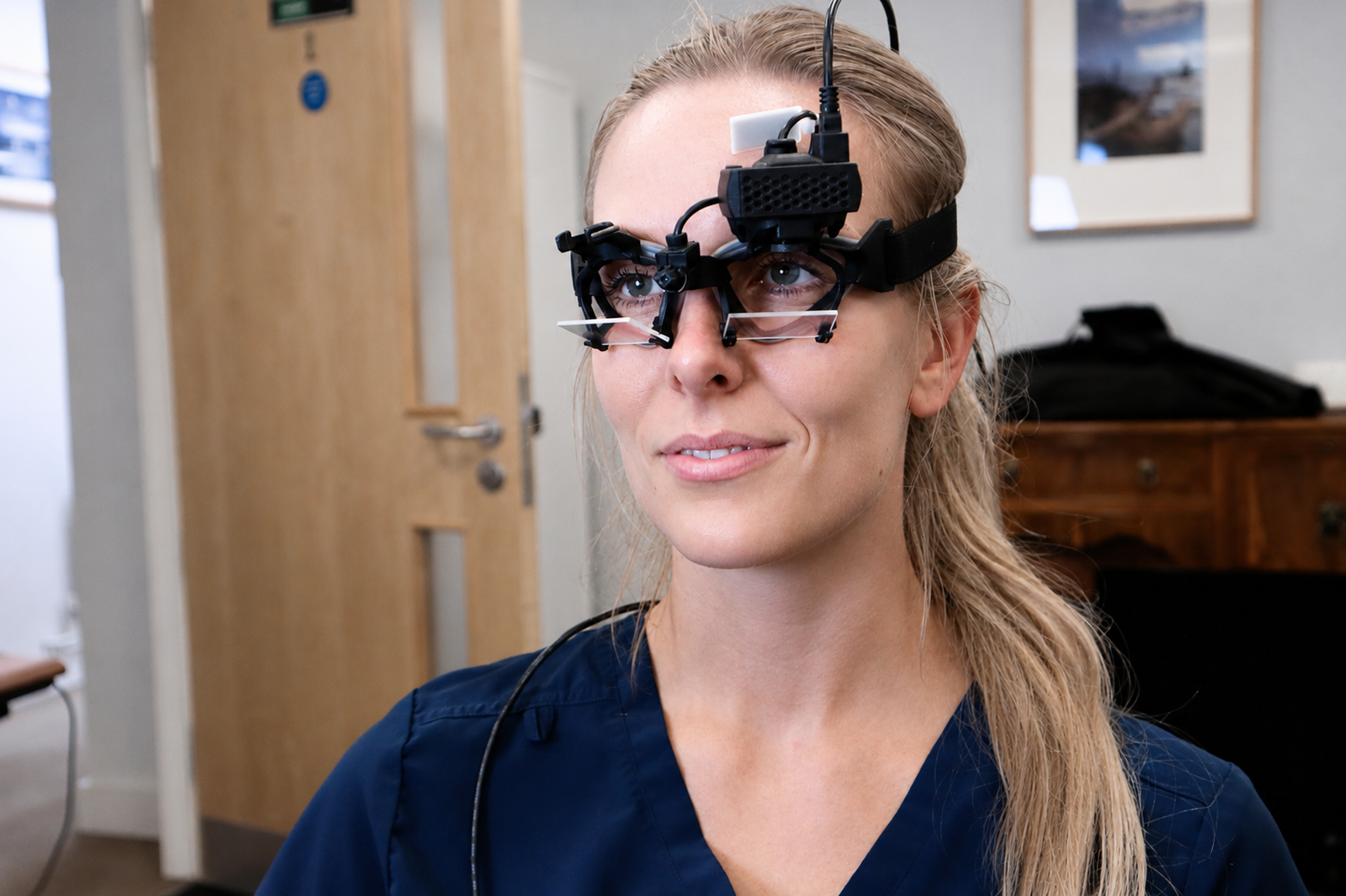
Lilley wearing our vHIT goggles with a high speed camera mounted over the left eye.
Why Might I Need a vHIT?
Your clinician may recommend a vHIT if you experience:
Vertigo
Persistent dizziness
Feeling off balance
Motion sensitivity
Blurred vision during movement (oscillopsia)
Unexplained falls
Suspected vestibular weakness
Dizziness following an ear infection or viral illness
The test is particularly useful for identifying reduced function of the semicircular canals.
What Does the Test Measure?
The inner ear contains six semicircular canals, three in each ear. These canals detect rotational head movements in different directions.
Unlike caloric testing, which mainly assesses the horizontal canal at very low frequencies, vHIT measures the function of all six semicircular canals during rapid, natural head movements. This makes it one of the most valuable modern vestibular investigations.
What Happens During the Test?
The assessment is simple and usually takes around 10 minutes.
You will be asked to:
Wear lightweight infrared video goggles.
Focus on a small target directly in front of you.
Keep your eyes fixed on the target while your clinician performs a series of small, rapid head movements.
The head movements are:
Quick
Gentle
Unpredictable
Safe
The goggles record your eye movements hundreds of times per second, allowing very precise measurement of the vestibulo-ocular reflex.
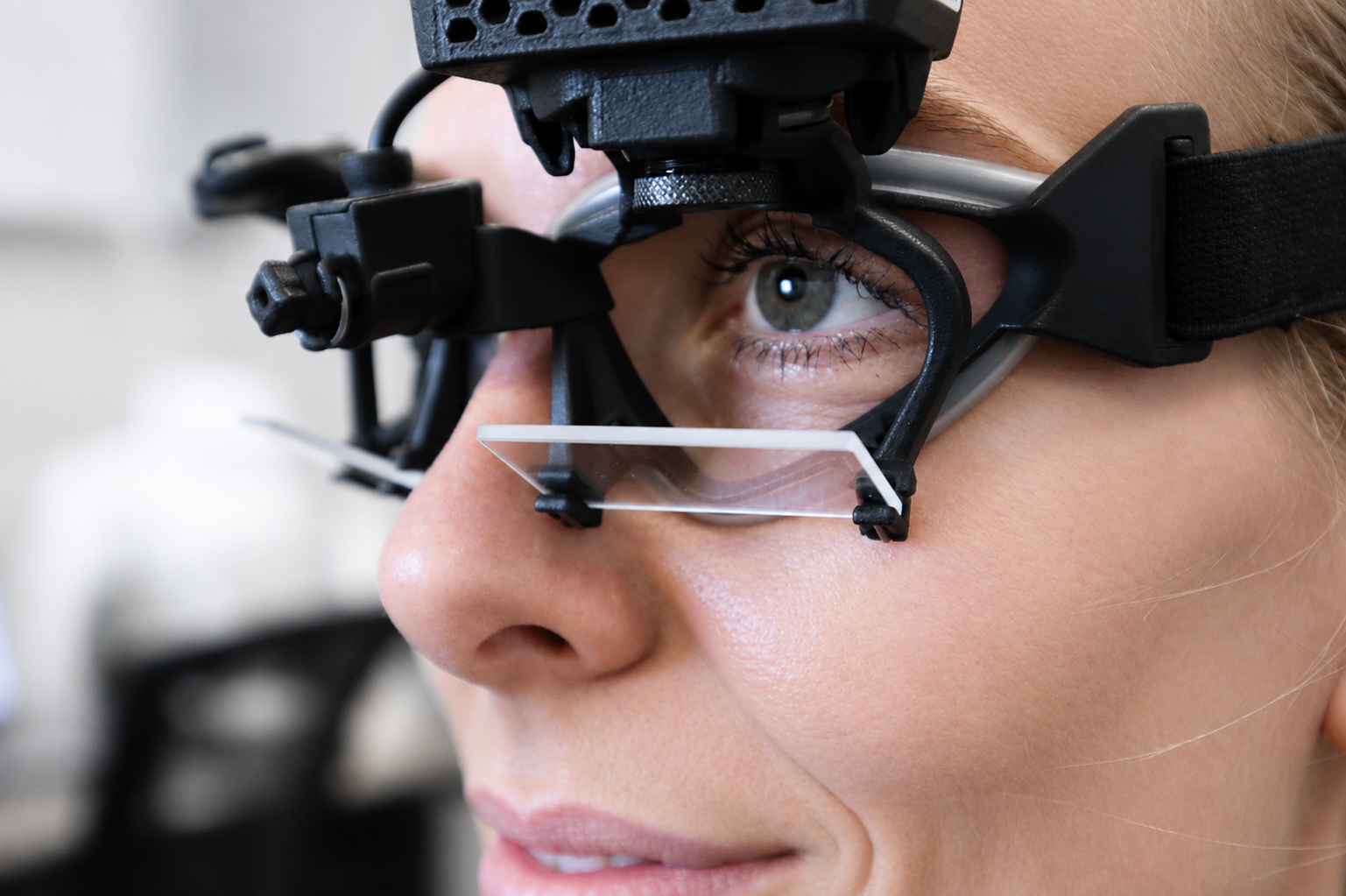
The camera mounted on our vHIT system records eye movements at 220 times per second.
Does the Test Make Me Dizzy?
Most people tolerate the test extremely well. Unlike caloric testing, vHIT usually causes little or no dizziness because the head movements are brief and closely resemble everyday movements.
Some patients with acute vestibular disorders may experience mild temporary symptoms, but these usually settle within seconds.
What Conditions Can vHIT Help Diagnose?
vHIT provides valuable information when investigating:
Superior Semicircular Canal Dehiscence (when interpreted alongside other tests)
Ototoxicity
Certain central vestibular disorders
The results are always interpreted alongside your clinical history and other vestibular investigations.
What Are Catch-Up Saccades?
If a balance organ is not working normally, your eyes may briefly fail to stay fixed on the target during a head movement. Your brain compensates by making a rapid corrective eye movement called a catch-up saccade.
These tiny eye movements are usually invisible to the patient but are detected by the high-speed cameras within the vHIT goggles. Their presence can help identify which semicircular canal has been affected.
Is vHIT Better Than Caloric Testing?
Neither test is "better"—they simply measure different aspects of vestibular function.
vHIT
Tests all six semicircular canals
Measures rapid, natural head movements
Usually causes very little dizziness
Quick and comfortable
Caloric Testing
Assesses each horizontal canal separately
Measures very low-frequency vestibular function
More sensitive for some chronic vestibular weaknesses
May temporarily provoke vertigo
For many patients, both tests are complementary and provide a much more complete picture of vestibular function.
How Should I Prepare?
Preparation is straightforward.
You may be asked to:
Avoid vestibular suppressant medication (if medically appropriate)
Remove glasses during testing
Avoid excessive eye make-up if possible
Wear comfortable clothing
Your clinician will advise you if any specific preparation is required.
What Do the Results Mean?
The results help determine whether:
One balance organ is weaker than the other.
Both vestibular systems are functioning normally.
More than one semicircular canal has been affected.
Additional vestibular testing is required.
A normal vHIT does not rule out all vestibular disorders. Some conditions, such as vestibular migraine or Persistent Postural-Perceptual Dizziness (PPPD), often have normal vHIT results and require diagnosis based on clinical assessment.
Is vHIT Performed Alongside Other Tests?
Yes. At Northern Balance Clinic, vHIT is usually combined with other investigations, including:
Caloric testing
Vestibular Evoked Myogenic Potentials (VEMP)
Computerised Dynamic Posturography
Hearing tests
Combining these tests provides a detailed understanding of how your vestibular system is functioning.
How Can Northern Balance Clinic Help?
At Northern Balance Clinic, we use state-of-the-art vHIT technology as part of our comprehensive vestibular assessment.
Our experienced vestibular clinicians use vHIT alongside other advanced diagnostic tests to investigate conditions including:
Vestibular neuritis
Labyrinthitis
Ménière's disease
Bilateral vestibular loss
Vestibular migraine
Benign Paroxysmal Positional Vertigo (BPPV)
Persistent Postural-Perceptual Dizziness (PPPD)
Dizziness following concussion or head injury
By identifying the underlying cause of your symptoms, we can recommend the most appropriate treatment and rehabilitation.
Book a Comprehensive Vestibular Assessment
If you are experiencing persistent dizziness, vertigo or balance problems, our specialist vestibular clinicians can perform a detailed assessment, including the Video Head Impulse Test (vHIT), to help determine the cause of your symptoms.
Ready to take the next step?
If you’d like help to get your balance problems resolved, get in touch and we’ll guide you through the process, from arranging an appointment to a friendly introductory phone call with one of our specialists.